
A little soreness or a change in how an implant feels can be unsettling, but it doesn’t automatically mean something has failed. The risk of dental implant failure depends on factors such as healing, gum and bone health, and the forces placed on the implant, so symptoms need context rather than guesswork.
It’s understandable to worry that pain or movement signals a serious problem, or that a complication leaves no options. Some concerns do warrant prompt attention, while others can have different explanations. A dental assessment can help clarify what’s happening and whether your health history, habits, or healing may be affecting your implant.
This guide explains common causes of early and late implant failure, personal factors that can influence risk, and warning signs to discuss with a dentist. You’ll also learn practical ways to support healing and long-term implant health, and what to expect from an individualized assessment. The goal is to help you respond thoughtfully, without assuming the worst.
Key Takeaways
- The risk of dental implant failure is influenced by healing and the health of the surrounding gums and bone; personal risk factors are not predictions of what will happen.
- Understand the difference between an implant stability problem and an issue with the restoration, which may have different next steps.
- Persistent or worsening pain, swelling, bleeding, discharge, or noticeable movement deserves a dental assessment, but symptoms alone don’t confirm implant failure.
- If you notice a change, note your symptoms, contact a dentist, and attend recommended follow-up. Share relevant health changes, medications, tobacco use, and grinding habits.
- An individualized evaluation can consider your symptoms, oral tissues, implant stability, restoration, and health history; imaging may be used when clinically appropriate.
What Is the Risk of Dental Implant Failure, and What Does Failure Mean?
Hearing the word “failure” can make any change around an implant feel alarming. But a problem with the visible tooth doesn’t necessarily mean the implant itself has failed. The risk of dental implant failure depends on how the implant heals, the health of the surrounding tissues, the forces it faces, and ongoing care. An individual assessment helps clarify what’s happening rather than relying on symptoms alone.
What does dental implant failure mean?
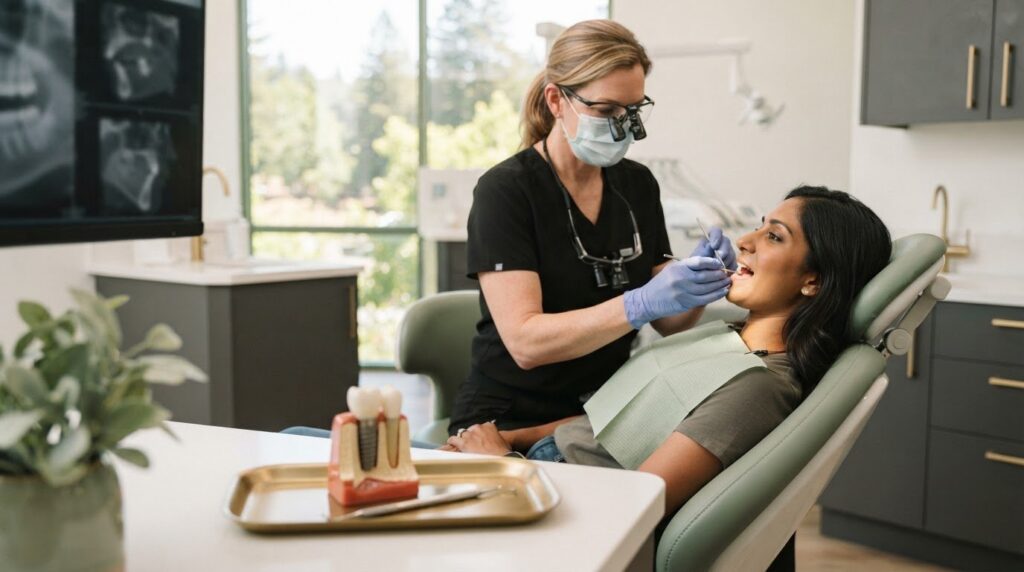
A dental implant has parts that work together. The implant fixture is placed in the jawbone and serves as an artificial root; an abutment connects it to the crown, the visible tooth. Implant failure generally refers to a loss of stability or function of the fixture, such as when it doesn’t become securely anchored or later loses support.
A crown that feels loose, or a problem with a connecting screw, may involve the restoration rather than the fixture. Some restoration issues can be addressed without removing the implant, but the source of the problem isn’t always obvious from how it feels. A dentist needs to assess the implant and restoration to identify which part is affected. A useful overview of dental implant failure also describes how clinical assessments distinguish implant-related concerns from other problems.
Osseointegration is the process that allows the implant to become anchored as the surrounding bone heals against its surface. This connection helps the implant withstand everyday use. If integration doesn’t develop as expected, or if support is affected later, the implant may become unstable. A complication is possible, but it isn’t an inevitable result of receiving an implant.
Early and late implant complications are different
Early concerns relate to healing and integration after placement. If the implant doesn’t become adequately anchored, it may not be ready to support the planned restoration. The timing and appropriate response depend on the person and clinical findings, so a new or worsening concern should be assessed rather than judged by a fixed calendar.
Later problems can involve different parts of the system. The fixture may lose support, tissues around it may become inflamed, or the crown or connecting components may need attention. These issues can feel similar to a patient, even though their causes and care can differ. That’s why discomfort or a change in bite alone can’t confirm that the implant has failed.
The risk of dental implant failure is shaped by individual health, healing, implant conditions, and care over time. Factors such as the condition of the gums and bone may be relevant, but no single factor predicts an outcome on its own. An implant evaluation can consider your history and the specific concern, helping guide a suitable next step without assuming the worst.
What Factors Can Increase the Risk of Dental Implant Failure?
Risk factors are useful to discuss, not reasons to assume an implant will fail. They help the dental team understand what may affect healing or the health of the tissues around an implant, then tailor planning and follow-up to your circumstances. A factor’s importance can differ from person to person, and several considerations may need to be viewed together.
How oral health and daily habits can affect risk
Healthy gums and supporting tissues matter. Active gum disease or ongoing oral inflammation can affect the tissues around an implant, so it’s helpful to tell your dentist about bleeding, tenderness, or a history of periodontal treatment. Addressing oral health concerns as part of care can help the team plan with a clearer picture of your needs.
Smoking is another factor to discuss because it may interfere with healing and tissue health. That doesn’t mean every person who smokes will experience implant problems, but being open about tobacco use helps your dentist consider it alongside other aspects of your health. If you’re thinking about reducing or stopping, mention that too; your dental team can discuss how it fits into your care.
After placement, regular home cleaning and recommended follow-up visits help monitor the gum tissue around the implant. An implant needs ongoing care, much like natural teeth. Your dentist can advise how to clean around your specific restoration and whether changes to your routine may help support tissue health.
How medical history and bite forces fit into implant planning
Your overall health can shape planning and healing. Diabetes control may be relevant, as can bone health and conditions or treatments that affect the body’s ability to heal. Share your medical history and medications, including recent changes, so your dentist can consider them in context. Don’t stop or alter prescribed medication on your own.
Bite forces deserve attention too. Teeth grinding or clenching, known as bruxism, may place additional pressure on teeth and restorations. It doesn’t automatically mean an implant will fail, but your dentist may want to understand the habit and assess how your bite affects the implant and its restoration. Mention jaw tension, waking with a sore jaw, or signs of grinding if you’ve noticed them.
Planning brings these details together: medical history, gum health, bone and oral anatomy, habits, and individual healing needs. The risk of dental implant failure can’t be judged from one detail alone. A discussion with your dentist can help identify which factors are relevant and what steps may be appropriate for you. If you have questions about your personal circumstances, an implant consultation with Butterfly Dental Care in San Jose offers an opportunity to discuss your concerns with Dr. Jianye Chen.
Which Symptoms May Signal a Problem With a Dental Implant?
A change around an implant can be worrying, especially if you’re unsure whether it’s the crown or the implant itself. Persistent or worsening pain, swelling, bleeding, discharge, or noticeable movement are reasons to arrange a dental assessment. These signs deserve attention, but they don’t confirm implant failure on their own. Symptoms can have different causes, and an examination helps determine what needs care.
Signs that deserve a dental evaluation
Contact your dentist if you notice ongoing tenderness, swelling, bleeding when cleaning, discharge, or a new sense that the implant or tooth is moving. Pay attention to symptoms that return, get worse, or affect chewing. Some tissue or implant concerns may not cause obvious pain, so the absence of discomfort doesn’t always tell the whole story.
Before your visit, note when the change began, whether it’s constant or comes and goes, and what seems to trigger it. Mention recent dental work or any change in how your bite feels. Avoid repeatedly pressing or wiggling the area to test its movement, since that won’t identify the cause and may irritate sensitive tissues.
For severe or rapidly worsening symptoms, seek urgent dental assessment. If you have difficulty breathing or swallowing, seek emergency medical care. Otherwise, describe your concern to your dental office and follow its guidance about the timing of an assessment.
Why a symptom does not prove implant failure
An implant restoration and the fixture beneath it are different parts. If the crown feels loose or your bite suddenly feels uneven, the issue may involve the crown or a connecting component rather than movement of the fixture in the jaw. By contrast, movement that seems to come from the fixture needs prompt professional assessment. It can be difficult to tell the difference by feel alone, so don’t try to diagnose it yourself.
A dentist can examine the crown, connection, surrounding gums, and implant stability. Imaging may be appropriate if the clinical findings suggest it could help assess the bone or implant position, but it isn’t necessary at every visit. Share what you’ve noticed and when it began; those details help guide the evaluation. The risk of dental implant failure cannot be determined by a symptom in isolation.
If your implant is part of a full-arch restoration, understanding how that treatment is structured may help you describe which area feels different. The All-on-4 dental implants guide offers context on full-arch implant treatment. Whether the concern involves one crown or a larger restoration, a dental assessment can clarify the next step without assuming the worst.

How Can You Lower Risk and Respond to a Possible Implant Problem?
A calm, practical response can help you get the right information without trying to diagnose the cause yourself. If you notice a change, make a note of what’s happening and arrange dental advice. For severe or rapidly worsening symptoms, seek timely care. Don’t wait for a routine follow-up if the problem is getting worse.
What to do if you notice a change
Use this simple plan to explain your concern clearly and protect the area while you arrange an assessment:
- Record what you notice. Write down when the symptom started, what has changed, and whether pain, swelling, bleeding, or discharge is improving or worsening. Note whether chewing or brushing seems to affect it.
- Contact a dentist. Describe the change and ask for guidance on the appropriate timing of an assessment. Don’t try to diagnose the problem based on how it feels.
- Attend recommended follow-up. Keep the appointment and share your symptom notes, relevant health changes, medications, tobacco use, and any grinding or clenching habits.
Avoid repeatedly testing whether the implant or restoration moves. Pressing, wiggling, or trying to tighten a component yourself can irritate the area or make it harder to describe what changed. Don’t stop or alter prescribed medication without guidance from the clinician who manages it.
Habits that support long-term implant health
Day-to-day care and professional follow-up help your dental team monitor the tissues around the implant. Follow the cleaning instructions provided for your implant and restoration. Clean gently but thoroughly, including around the gumline and any areas your dentist has shown you how to reach. If a spot is difficult to clean or brushing causes persistent bleeding or discomfort, mention it rather than avoiding it.
Keep recommended dental visits even if the implant feels normal. An assessment can give your dentist an opportunity to review the surrounding tissues and restoration, and to respond to changes before you’re left guessing. Comprehensive practices like Advanced Dental Care of Dover emphasize that your follow-up schedule should reflect your specific oral health and individual care needs.
If you clench or grind your teeth, discuss it with your dentist. Added bite force may be relevant to your restoration, and your dentist can consider whether any protective steps belong in your care plan. Similarly, report changes in your health, medications, or tobacco use so your dental team can factor them into ongoing care.
There’s no single routine that fits every implant. Gentle cleaning, consistent follow-up, and honest communication about habits and health can help your dentist respond to your needs and support long-term implant health. To discuss concerns or arrange an individualized implant assessment, contact Butterfly Dental Care in San Jose.
How Does an Implant Evaluation in San Jose Help Clarify Your Risk?
Uncertainty about an implant can make every twinge or change in your bite feel significant. An individualized evaluation replaces guesswork with a closer look at the implant, its restoration, the surrounding tissues, and your health history. It can help clarify what may be contributing to a concern and what next steps are appropriate, without assuming that a problem means the implant has failed.
What a dental implant assessment may involve
The visit usually begins with your experience: what you’ve noticed, when it started, whether it has changed, and how it affects eating or cleaning. Your dentist may also review when the implant was placed, what treatment has taken place since, and relevant medical conditions or medications. Bringing notes or a list of recent health changes can make that conversation easier.
The examination may include the implant and its restoration, your bite, and the gum and other tissues around the area. This helps the dentist consider whether a concern seems related to the fixture, the crown or connection, or the surrounding tissue. Imaging may be recommended if it would help assess a particular finding, but it isn’t automatically required at every visit. Any testing or suggested next steps depend on the clinical findings.
An assessment is a chance to understand the concern before making treatment decisions. Your dentist can explain what the examination suggests and discuss appropriate options based on your situation. The risk of dental implant failure can’t be determined by one symptom alone, and an individualized review is more useful than trying to reach a conclusion at home.
Discussing implant concerns with a San Jose dentist
Butterfly Dental Care is a San Jose dental practice led by Dr. Jianye Chen. At an implant evaluation, share when symptoms began, whether they’re worsening, and any changes in your health, medications, tobacco use, or grinding habits. These details help shape a discussion around your specific concerns, rather than relying on general risk factors alone.
If a concern feels urgent, the practice’s information about urgent dental care in San Jose can help you understand the next step. For difficulty breathing or swallowing, seek emergency medical care. Otherwise, contacting a dental office for guidance can help you determine how promptly you should be assessed.
You don’t need to decide for yourself whether an implant has failed before asking for help. A thoughtful evaluation can clarify whether the issue involves the restoration, implant stability, or surrounding tissues, then guide a conversation about care. To discuss your concerns with Butterfly Dental Care, schedule a dental visit for an individualized assessment.
Take the Next Step With Confidence
Concern about an implant doesn’t have to become a conclusion before you’ve had a chance to talk it through. If something feels different, bringing your questions to a dental visit can help turn uncertainty into a clearer, more manageable next step. The risk of dental implant failure is personal, and your concerns deserve an assessment that considers your situation rather than assumptions.
Whether you’re noticing a change or simply want to understand your implant health better, you can discuss what matters to you and learn what the findings may mean. Butterfly Dental Care provides dental implant care in San Jose, led by Dr. Jianye Chen. A conversation can help you understand your options without promising a particular outcome.
Schedule a dental visit to discuss your implant concerns. Taking that step can bring greater clarity and help you move forward with confidence.
Frequently Asked Questions
Is dental implant failure common?
Dental implant failure can happen, but a general statistic can’t tell you what will happen in your case. The risk of dental implant failure varies with personal health, planning, healing, and care over time. For a more relevant discussion, bring your medical history and any concerns to your dentist. Patients in San Jose’s 95129 area can discuss their circumstances with a local dental practice rather than treating a population-level figure as a personal forecast.
Can a dental implant fail years after placement?
Yes, an implant can develop a problem after it has been in place for years. For example, a change in the surrounding gum tissue or a damaged restoration may need attention even if the implant previously felt normal. Keep track of when the change began and whether it affects chewing or cleaning. A dentist can assess what has changed and whether the concern involves the implant, nearby tissues, or the restoration.
Can a dental implant fail without pain?
Yes, a problem may develop without noticeable pain. You might instead see a change in the gumline, notice bleeding during brushing, or find that a restoration feels different when you bite. Mention even subtle changes at a dental visit, particularly if they persist or progress. If you take photos to track visible changes, they may help you explain what you noticed, but they can’t replace an examination.
Can a failed dental implant be replaced?
Sometimes, but replacement depends on the reason for the problem and the condition of the site. A dentist may first assess the bone and surrounding tissues and consider whether an underlying concern needs to be addressed before discussing another implant. The evaluation helps establish which options are appropriate for your situation. Replacement isn’t automatic, and the timing or approach may differ from the original treatment.
What is implant rejection, and is it the same as implant failure?
“Implant rejection” is a phrase patients may use when an implant doesn’t remain stable, but it doesn’t identify the cause. Dental implant problems can involve healing, the surrounding tissues, or parts of the restoration, and these concerns aren’t necessarily the same. Rather than relying on the label, describe what you’ve noticed and when it started. A dentist can assess the specific issue and explain the findings in clear terms.
Should I wait if my dental implant feels loose?
Don’t wait to seek dental advice about new or noticeable looseness. The sensation might come from a crown or another restoration, but it can be difficult to tell at home. Avoid wiggling, tightening, or otherwise adjusting it yourself. When you contact a dental office, explain when the feeling began, whether it’s changing, and if you’ve noticed pain, swelling, or a bite change. This helps the team understand your concern.
 English
 Chinese (Simplified)
 Spanish
 Vietnamese