
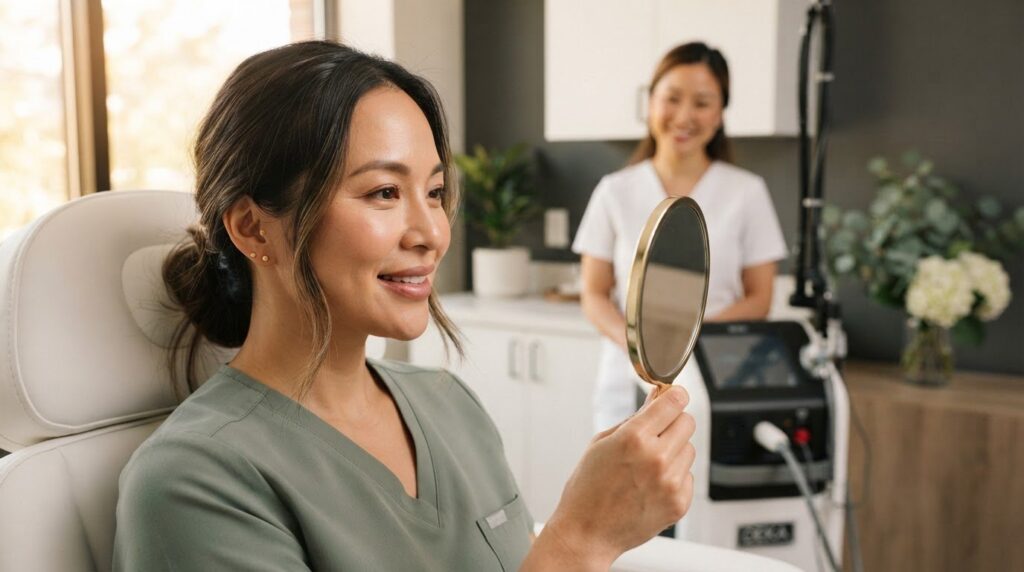
Some people notice a difference after one LipLase session, but there isn’t a fixed session count for every goal. LipLase before and after results may show changes in fullness or definition after the first treatment. The number of sessions depends on your starting appearance and the change you want. The aim is a natural-looking enhancement, not a one-size-fits-all result.
It’s understandable to want a clearer picture before deciding whether treatment feels right for you. This guide explains how fullness, definition, and fine lines may change, what can affect the number of sessions, and what to expect afterward. You’ll also learn how LipLase works and how recovery may fit into your routine, so you can make a decision with realistic expectations.
Key Takeaways
- Some people notice a change after one session, but the treatment plan depends on the fullness and definition they’re hoping to achieve.
- Plan to avoid alcohol and spicy foods for 24 hours after treatment, while daily activities can resume immediately.
- LipLase is intended to support a fuller-looking lip contour and soften the appearance of fine lines.
- Before-and-after comparisons are most useful when you look for gradual changes in shape and definition, not just overall size.
How long will the recovery after LipLase treatment take?
Treatment time can vary, so ask your treating professional how long your session is expected to take. The non-invasive laser treatment allows patients to resume daily activities immediately. Avoid alcohol and spicy foods for 24 hours following treatment. This short pause gives you a simple aftercare step to plan around meals and social events.
Sun care matters, too. Take sun-safety precautions for seven days after treatment and protect your lips outdoors. Before an upper-lip session, consider how sun exposure fits your routine, then follow your treating professional’s guidance. To compare before-and-after photos, use similar lighting, angles, and facial expressions so you can assess changes in definition and fullness consistently.
Some people notice a difference after one session, but the number of sessions and their spacing depend on your goals and starting lip appearance. There’s no universal treatment count or interval for everyone. During treatment planning, discuss whether one or more sessions suit your goals and how many weeks apart they should be. A gradual approach can keep the focus on natural-looking definition.
Is LipLase FDA-cleared or approved? The LipLase name alone doesn’t establish FDA clearance or approval. That status relates to the specific device and intended use, so don’t assume it based on the treatment name.
How long do LipLase results last? Results vary from person to person and depend on the changes achieved. LipLase promotes collagen remodeling and synthesis, so the appearance may evolve as the lips respond over time.
What are LipLase side effects, risks, and contraindications? LipLase is non-invasive, and patients can return to daily activities immediately. Individual health circumstances and treatment suitability still matter, so discuss your medical history and any concerns before proceeding.
Who is a good candidate for LipLase? It may suit someone seeking subtle fullness or clearer lip definition without injectable filler. Whether you’re focused on the upper lip, lower lip, or both, your desired result helps shape the treatment plan.
Lip definition and fine-line smoothing
LipLase targets both lip contour and the appearance of fine lines around the mouth. Its intraoral step is intended to improve perioral wrinkles and create vermilion eversion, the outward turn of the lip edge that can create a fuller effect. The treatment uses Fotona SMOOTH® mode, a non-ablative Er:YAG laser approach that thermally stimulates fibroblasts and promotes collagen remodeling and synthesis.
This process supports the lips’ own collagen response rather than adding volume directly. Unlike fillers, which add material to change lip shape, the laser procedure is designed to support a smoother appearance through collagen activity. It doesn’t erase every line or redraw the lip border. The intended change is a more defined-looking edge and softened lines, with results shaped by your starting lip texture and treatment goals.
The upper lip and lower lip can be treated separately or together. For example, someone focused on fine lines above the mouth may prioritize the upper lip, while someone seeking more balanced definition may discuss both. LipLase uses Er:YAG laser technology at 2940 nm, and its two-step approach includes treatment inside the mouth and around the lips. The intraoral step supports vermilion eversion, while the external step addresses the lip surface.
To assess changes, compare photographs taken before and after treatment in similar lighting, from the same angle, with a relaxed expression. Look at the lip edge, visible lines, and how the upper lip sits, rather than judging fullness alone. This helps distinguish contour definition from added volume. If your main concern is deeper lines or a particular shape change, describe it during treatment planning so the discussion can focus on your priorities.
Natural-looking lip fullness
LipLase aims to create a natural enhancement by supporting a fuller-looking lip contour rather than adding filler. The expected change is visual, not a predictable, measured increase in volume. Much like choosing a breast lift without implants to rejuvenate shape using existing tissue, laser lip treatments appeal to individuals who prefer refining their contours without introducing synthetic materials.
Subtle Changes in Lip Volume
Fotona LipLase® uses heat to stimulate fibroblasts and promote collagen remodeling and synthesis in the lips. Its intraoral step is intended to create vermilion eversion, the outward turn of the lip edge that can make lips look fuller. When comparing before-and-after photos, look at the lip border and balance, not simply size. This helps distinguish subtle contour changes from dramatic volume enhancement.
Expected Volume Improvement
LipLase doesn’t provide a fixed amount of volume improvement. The visible effect depends on the lips’ starting shape, their response to collagen stimulation, and the treatment goal. For example, someone seeking a gentle enhancement may focus on a more defined upper lip, while someone wanting overall balance may consider both lips. The aim is a fuller appearance shaped by your features, not a promised measurement.
During an appointment, describe the change you want in practical terms, such as a more noticeable lip edge or a youthful-looking contour. Your treatment provider can then discuss whether LipLase fits that goal. The treatment can target the upper lip, lower lip, or both, so the planned area matters when considering the final appearance.
People in their 20s may seek enhancement, while people in their 50s may focus on smoother lip lines. These examples reflect different priorities, not a required age or a set result. LipLase treatment doesn’t require topical numbing gel; discuss any concerns about discomfort as part of planning, alongside the desired fullness and definition.

LipLase before-and-after results
Useful before-and-after comparisons show changes in contour, fullness, and the lip edge, not just a close-up of the mouth. Take a baseline photo, then repeat the same angle, lighting, and relaxed expression after treatment. Some people notice a difference after one session, but collagen remodeling means the appearance can continue to evolve. Avoid judging the final effect from a single immediate snapshot.
Fotona LipLase® is a non-invasive laser treatment designed to stimulate collagen in the lips. It doesn’t add volume through injections. The intended effect is a fuller-looking contour and improved definition, rather than a predictable change in lip size. For a fair comparison, note whether the upper lip, lower lip, or both were treated, and compare the same areas in each photo.
How do LipLase and lip filler compare in before-and-after results? Lip filler adds volume directly, while LipLase uses laser energy to support collagen remodeling and a fuller appearance. Filler results typically last between six and twelve months, depending on the product and metabolism. LipLase works differently, so the results aren’t directly equivalent.
Filler can also involve swelling and bruising for several days after treatment, which may affect early photos. LipLase allows patients to resume daily activities immediately, but that doesn’t mean visible changes are instant. If sessions are planned, discuss how they’ll be spaced and when progress photos make sense. Consistent timing and photography help distinguish gradual changes from differences in expression or lighting.
For a personal comparison of expected contour and fullness, book a LipLase appointment to discuss your treatment goals and the areas you’d like addressed.
Butterfly Dental Care: Routine Dental Cleanings
Butterfly Dental Care offers Laser LipLase for people considering a non-invasive approach to lip fullness and definition. If you’re weighing treatment options, the next step is to discuss your desired result, whether you want to address the upper lip, lower lip, or both. A focused conversation can help connect your goals with the treatment approach and clarify what changes to look for in before-and-after comparisons.
Butterfly Dental Care also provides routine dental cleanings, dental implants, laser dental treatments, and Invisalign orthodontic treatment in the San Jose area. These services address different oral health and appearance needs, so the right next step depends on what you want to address. To discuss LipLase and your goals, contact Butterfly Dental Care.
Choose the Next Step That Feels Right
Deciding what you want to change is a useful next step. You may hope to feel more comfortable with your natural lip shape, or want to understand whether a subtle enhancement fits your preferences. Thinking about LipLase before and after results can help clarify what matters to you, but your priorities should guide the conversation, not an idealized photo or someone else’s outcome.
Before moving forward, consider how you’d describe your goal in everyday terms. You might want a more defined border, a balanced appearance, or simply to explore whether treatment suits you. Sharing your perspective gives the discussion a practical starting point and helps keep expectations personal and grounded. Similarly, for individuals exploring other non-invasive aesthetic options to refresh their look, such as hair restoration with Thursday’s Calabasas, focusing on personal goals helps ensure the outcome aligns with your expectations.
If you’d like to talk through your goals and possible next steps, get in touch with Butterfly Dental Care. A thoughtful conversation can help you decide what feels appropriate, at your own pace.
Frequently Asked Questions
How many sessions are required?
Some people notice a difference after one session, but the number of sessions depends on your desired change and starting lip appearance. Before planning, decide whether your priority is definition, fullness, or both, and whether you want to address the upper lip, lower lip, or both. These details make it easier to discuss a treatment plan that matches your goals.
What Is Fotona LipLase, Anyway?
Fotona LipLase is a laser treatment that uses Fotona SMOOTH® mode, a non-ablative Er:YAG approach. “Non-ablative” means the treatment stimulates tissue without removing its surface. The process uses thermal stimulation to encourage collagen remodeling in the lips. This helps explain why the intended change is gradual, rather than the immediate volume addition associated with injectable fillers.
Are There Any Special Post-Care Instructions?
After treatment, avoid alcohol and spicy foods for 24 hours, and take sun-safety precautions for seven days. Plan meals and outdoor activities around those windows, especially if your appointment falls before a social event or extended time outside. These steps are straightforward, but following both timeframes gives you a clear aftercare plan for the first week.
Does LipLase hurt?
Topical numbing gel isn’t required for LipLase, but that alone doesn’t determine how the treatment will feel for you. Comfort is personal, so mention any sensitivity or anxiety before the procedure begins. This gives the treating professional an opportunity to explain the process and address your questions before you decide whether to proceed.
How Does LipLase Work Its Magic?
The procedure uses laser-generated heat to stimulate fibroblasts, cells involved in collagen production. Fotona LipLase has two steps: an intraoral step intended to improve lines around the mouth and encourage the lip edge to turn outward, and an external step that treats the lip area. Together, these steps support collagen remodeling and a fuller-looking contour.
How long does each session last?
Each Fotona LipLase treatment session lasts 15-30 minutes. Use that as the treatment-time estimate when planning your day, rather than assuming it describes the full time needed for an appointment. For people in 95129 balancing work, errands, or family plans, knowing the treatment duration can help with scheduling while leaving room for the rest of the visit.
 English
 Chinese (Simplified)
 Spanish
 Vietnamese