
Laser dentistry can feel less familiar than a traditional dental procedure, but preparation is straightforward: brush and floss thoroughly, use an antiseptic mouthwash, and remove jewelry or other objects from your mouth beforehand. Knowing how to prepare for laser dental treatment also means following the instructions for your specific appointment. If sedation is planned, you may be told to fast for several hours; make medication changes only with your dentist’s guidance.
It’s natural to wonder whether laser treatment will hurt, whether you’ll need numbing, or what recovery will feel like. Laser dentistry may reduce drill noise and vibration, but it doesn’t eliminate the need for anesthesia in every case. What you experience depends on the treatment area and procedure.
This guide explains what laser dentistry involves, what you may feel during treatment, and what to expect with anesthesia, bleeding, swelling, pain, and healing. You’ll also learn how preparation and aftercare can support a more comfortable recovery, whether your treatment involves gum tissue or a tooth.
Key Takeaways
- Laser dentistry can treat soft tissue and some tooth-related concerns, but the right tool depends on the procedure.
- Numbing isn’t always needed, though a dentist may use local anesthesia to support comfort during treatment.
- Procedure time and bleeding depend on the treatment area and complexity; soft-tissue lasers can seal small blood vessels as they work.
- Plan gentle aftercare, including soft foods and following your dental professional’s instructions, to support healing.
What Is Laser Dentistry?
Laser dentistry uses focused light to treat soft tissue or, with suitable lasers, tooth structure. A dentist examines your mouth and selects tools according to the treatment. Prepare by brushing and flossing, using antiseptic mouthwash, and removing oral jewelry. Tell your dentist about medications, health conditions, allergies, past anesthetic reactions, and dental anxiety.
Potential Benefits Compared With a Dental Drill
For some procedures, laser light can reduce reliance on a traditional dental drill. It may treat gum tissue, remove decay, or prepare a tooth for a filling, depending on the laser and treatment site. Less drill noise and vibration may ease anxiety for patients who find those sensations difficult. For example, soft-tissue lasers can shape gum tissue while helping control bleeding.
Benefits, Limitations, and Risks
Laser dentistry can support precise treatment, but it doesn’t replace every dental tool. Lasers may not suit cavities between teeth, around old fillings, or large cavities requiring crown preparation. Your dentist will assess the treatment area and your oral health before choosing an approach. A laser-only approach may not address every part of a procedure.
Laser light serves different purposes. It can remove oral lesions for biopsy, activate tooth-whitening solutions, or help treat gum disease by targeting bacteria near a tooth’s root. These applications aren’t interchangeable: cosmetic whitening differs from gum treatment, and each requires an appropriate laser and plan.
When choosing a laser dentist, look for someone who examines your mouth, explains why laser treatment may fit your concern, and describes when other tools may be needed. For an emergency dental concern, seek a timely professional assessment rather than assuming a laser is the right treatment.
Anesthesia during laser treatment
Laser dentistry doesn’t automatically eliminate the need for anesthesia. Many laser procedures don’t require anesthetic, while numbing may be used when needed for comfort. The decision depends on the treatment, tissue involved, and expected sensitivity. A small gum procedure and preparing a tooth for a filling can feel different, so anesthesia is considered for the specific task, not simply because a laser is involved.
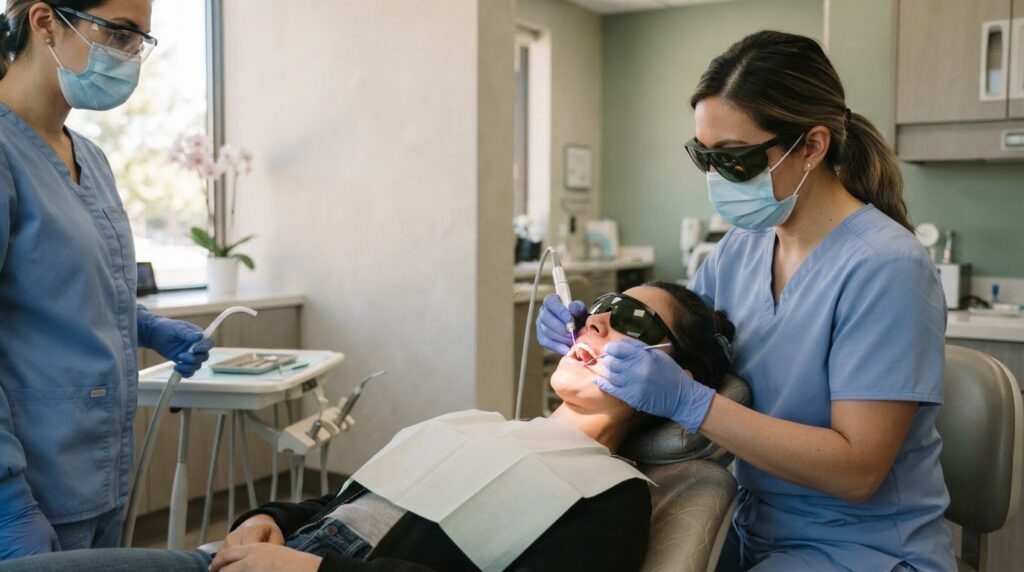
Protective glasses shield your eyes from laser light during treatment. Your dental team will fit them before the procedure begins. Keep them in place as instructed, and tell the team if they feel uncomfortable or shift. This step supports safe treatment while allowing the dentist to focus on the treatment area.
If local anesthetic is appropriate, it takes a few minutes during the appointment to become effective. The dentist applies it before beginning the sensitive part of treatment, then allows time for it to work. If you still feel discomfort as treatment starts, signal the dental team rather than trying to endure it silently.
Before your appointment, tell your dentist about your medications, allergies, health conditions, and any previous reaction to anesthetic. Mention dental anxiety, too. These details help the team plan for comfort and consider how treatment involving soft tissue or tooth structure may affect you. Don’t change prescribed medication on your own before treatment.
Sedation is different from local numbing. If you’re receiving sedation, you may be instructed to fast for several hours before the appointment. Follow the specific instructions you’re given, since eating or drinking may affect the sedation plan. Ask which comfort measures are planned, whether numbing is expected, and what to expect during recovery.
Whether you’re preparing for a gum procedure or treatment involving a tooth, a clear discussion can ease uncertainty. A conversation about laser dental treatments can help you understand the role of anesthesia and protective eyewear in your care.

Laser procedure sensations, duration, and bleeding
Laser procedures may feel different from traditional dental care. What you notice depends on the tissue treated and the procedure.
Sensations During Laser Procedures
During treatment, you may feel pressure, warmth, or brief sensitivity around the treatment area. A laser can avoid the loud drill noise and vibration that some patients find unsettling. Soft-tissue lasers can seal exposed blood vessels as they cut, which may reduce bleeding during gum procedures. Your dentist can describe expected sensations before beginning, so you know when to speak up about discomfort.
Procedure Duration and Multiple Visits
Simple laser procedures typically take 15-30 minutes, while more involved treatments may take 1-2 hours. A small filling performed with a laser might take 20 minutes. Many procedures can be completed in a single visit. Treatment scope matters: complex care or several treatment areas may require separate appointments, so the overall schedule depends on the work planned.
Laser dentistry can be used for different procedures, including shaping gum tissue, treating gum disease, and removing decay to prepare a tooth for a filling. It may also help with oral lesions or activate a whitening solution. The laser’s role varies by procedure. For example, a laser may remove decay, while traditional tools may still shape or polish a filling.
After treatment, redness, swelling, or hot-and-cold sensitivity may occur near the treated area. These effects should ease within a few days. Soft-tissue lasers can help limit bleeding and swelling during treatment, but the effects vary with the procedure and tissue involved. Follow the aftercare instructions for your treatment, and report any concerning symptoms to your dental professional.
Safety also means protecting your eyes from laser light. Wear the protective glasses provided during the procedure and keep them in place as directed. Your dentist will assess whether laser treatment suits your planned care, including whether a cavity’s location or size calls for another method.
Pain, swelling, bleeding, and healing after treatment
After laser treatment, follow the care instructions for your specific procedure. Gentle cleaning, suitable foods, and a cold compress can support comfort during the first day.
Numbing Medicine and Pain Control
Numbing medicine may be used during some laser procedures to help with comfort. As it wears off, the treated area may feel tender or sensitive. For comfort, apply a cold compress to the outside of your cheek for 15-20 minutes at a time during the first 24 hours. Use prescribed medication exactly as directed, and don’t add other medication without professional guidance.
Swelling, Bleeding, and Healing
Redness and swelling around the treatment area should decrease within a few days. A focused laser beam can seal tissue as it works, helping reduce bleeding and discomfort. Lasers can also promote clotting and tissue repair, which may support healing. The treated area still needs gentle care, especially after treatment involving gum tissue.
Choose soft foods for the first few days after treatment. For 24 to 48 hours, avoid hard, spicy, or very hot foods that could irritate the area. Avoid smoking and alcohol for a few days to support healing. If your dentist recommends a warm compress instead of a cold one, follow that advice for your treatment.
Keep your mouth clean without scrubbing the treated area. Gently brush your teeth and tongue when applicable, and follow your dental professional’s cleaning instructions. Attend follow-up visits so healing can be monitored and the outcome assessed. Hot-and-cold sensitivity should subside within a few days after the procedure.
Laser treatment can leave discomfort minimal for many patients, but recovery care still matters. For personalized guidance on laser dental treatment and aftercare, schedule a dental appointment.
Butterfly Dental Care: Routine Dental Cleanings
Butterfly Dental Care offers laser dentistry for patients considering this approach. An evaluation can help match your concern with an appropriate treatment plan and explain what to expect before and after the procedure.
Routine dental cleanings support ongoing oral care, while laser treatments address specific needs. For other concerns, Butterfly Dental Care also offers dental implants and Invisalign® clear aligner therapy. The right next step depends on your needs, whether you’re planning a procedure or seeking preventive care.
To discuss laser treatment or routine dental cleanings, contact Butterfly Dental Care.
Make Your Next Dental Visit a Confident One
Your next step can be a conversation about your needs, comfort, and goals. Before booking, jot down questions you want answered, such as which treatment approach fits your concern and what care you’ll need afterward. Preparing for laser dental treatment starts with sharing relevant health details and being open about what makes dental visits difficult for you.
Butterfly Dental Care offers laser dental treatments, routine dental cleanings, and dental implants. Whether you’re planning a laser procedure, maintaining your oral health, or exploring tooth replacement, discussing your priorities can help guide the visit. Your questions deserve thoughtful attention, and a clear plan can make the next step feel more manageable.
Contact Butterfly Dental Care to discuss your dental care needs. A calm, informed conversation is a good place to begin.
Frequently Asked Questions
What are the potential benefits and risks of this treatment?
Laser treatment may reduce drill noise and vibration, and soft-tissue lasers can help limit bleeding during gum procedures. However, lasers aren’t suitable for every treatment area, including some cavities between teeth or near old fillings. Temporary redness, swelling, or temperature sensitivity can follow treatment. The procedure type and location determine which potential benefits and side effects are relevant.
What happens during this treatment?
The dentist first examines your mouth and identifies the tissue or tooth area to treat. You’ll wear protective glasses while the dentist directs the laser to the planned site. For a soft-tissue procedure, the laser may shape gum tissue; for some tooth procedures, it may remove decay. Other dental tools may still be used for parts of treatment, such as shaping a filling.
Do I need to fast or change medications before laser dental treatment?
Fasting is generally relevant when sedation is planned, and you may be told to fast for several hours before your appointment. Preparing for laser dental treatment starts with following the instructions for your specific visit. Tell the dentist about every medication you take, including aspirin or ibuprofen, and don’t stop or change prescribed medicines without their guidance.
Do laser dental procedures require anesthesia?
Not always. Some laser procedures can be completed without anesthetic, while local numbing may be used if treatment could cause discomfort. The dentist considers the procedure and area involved, such as gum tissue or a tooth being prepared for a filling. If numbing is planned, allow a few minutes during the appointment for the local anesthetic to take effect.
What are the risks and side effects of laser dental treatment?
Possible short-term effects include tenderness, redness, swelling, or hot-and-cold sensitivity. These symptoms should ease within a few days after treatment. Soft-tissue lasers can seal small blood vessels as they work, which may reduce bleeding, but bleeding and healing depend on the treatment site. A laser also isn’t appropriate for every cavity, so the choice of treatment matters.
What should I expect during recovery after laser dental treatment?
Recovery care depends on the treated area. Understanding how to prepare for laser dental treatment also means knowing what aftercare your dentist recommends. Choose soft foods at first, keep the site clean as instructed, and use a cold compress on your cheek for 15-20 minutes at a time during the first 24 hours if recommended. Take prescribed medication as directed, avoid strenuous activity for 24-48 hours, and attend follow-up visits so healing can be assessed.
 English
 Chinese (Simplified)
 Spanish
 Vietnamese