
Finishing Invisalign doesn’t mean your teeth stop moving. If you’re wondering whether you need a retainer after Invisalign forever, the practical answer is that long-term wear is generally recommended, often at night indefinitely, to help maintain alignment. Your initial schedule may involve more frequent wear before you transition to nighttime use.
It’s understandable to hope that once treatment is complete, you can put the aligners away for good. But teeth can shift naturally over time, and the gums and bone need time to adjust around teeth in their new positions. A retainer supports that adjustment and helps maintain your results.
Here, you’ll learn why teeth can move after Invisalign, how retainer wear may change over time, and what to consider when comparing clear and Hawley retainers. The aim is to make long-term retention easier to understand and manage, so you know what helps protect the smile you’ve worked toward.
Key Takeaways
- Retainer wear often continues long term because teeth can shift even after Invisalign treatment is complete.
- Your wear schedule may change over time, so follow your dentist’s instructions as you transition from more frequent wear to nighttime use.
- Clear retainers are nearly invisible, while Hawley retainers use a wire and an acrylic base; each offers a different fit and appearance.
- Teeth and the surrounding gums and bone need time to adjust after orthodontic movement, making retention an important part of maintaining alignment.
- Keep your retainer clean and protected, and have its fit and condition checked if it feels different or no longer sits comfortably.
Do You Have to Wear A Retainer After Invisalign® Treatment?
Usually, yes: long-term retainer wear is recommended, often indefinitely, to help maintain alignment. Your schedule may change after Invisalign, moving from more frequent wear to nighttime use as directed by your dentist.
Following Dentist Wear Instructions
Follow your dentist’s retainer instructions, including the prescribed hours, and change your schedule only as directed. The right routine depends on your treatment and how your teeth respond after aligners.
Keep your retainer in your routine, just as you followed the aligner plan during Invisalign treatment. If your instructions call for daytime wear, remove it only for the activities your dentist specifies. Don’t switch to nighttime wear alone simply because the retainer feels comfortable. Consistent use supports your teeth as your mouth adjusts.
Retainer Wear Duration
Retainer wear duration is how long you continue using a retainer to help preserve your results. It often extends beyond the initial adjustment phase because teeth can shift over time, even when they look aligned.
After treatment, some patients wear a retainer for 20-22 hours per day during the first 3-6 months, then transition to nighttime wear. The exact progression follows the dentist’s directions. Long-term use is commonly recommended, and nighttime wear may continue indefinitely. This is why the answer to “Do I need a retainer after Invisalign forever?” is often yes, though the daily schedule can gradually become less demanding.
Removable Retainer Schedules
A removable retainer schedule sets when to wear and remove the appliance throughout the day. Following the routine keeps wear consistent while allowing you to take it out for meals and oral hygiene when instructed.
Some patients begin with full-time wear, while others receive a different schedule based on their treatment plan. A common initial schedule is 20-22 hours daily for 3-6 months, followed by nighttime use. Invisalign aligners are different: they’re worn 20-22 hours a day and changed every 1-2 weeks according to the treatment plan. Don’t confuse that sequence with retainer wear after treatment ends.
Transitioning to Nighttime Wear
Transitioning to nighttime wear means reducing daytime use when your dentist directs you to do so. A gradual change keeps your routine aligned with the retention plan instead of stopping wear abruptly.
After the initial full-time phase, nighttime wear is a common next step. Some schedules describe nighttime use from 6 months to 2 years after treatment, followed by ongoing maintenance. Long-term wear may mean nights indefinitely, sometimes a few nights per week. If a retainer feels tight after a break, don’t force it; resume the schedule your dentist provided for your situation.
Clear and Hawley removable retainers
Clear and Hawley retainers both help hold teeth in their corrected positions, but their designs differ. Appearance, cleaning habits, and how consistently you can wear one can help guide which style suits your routine.
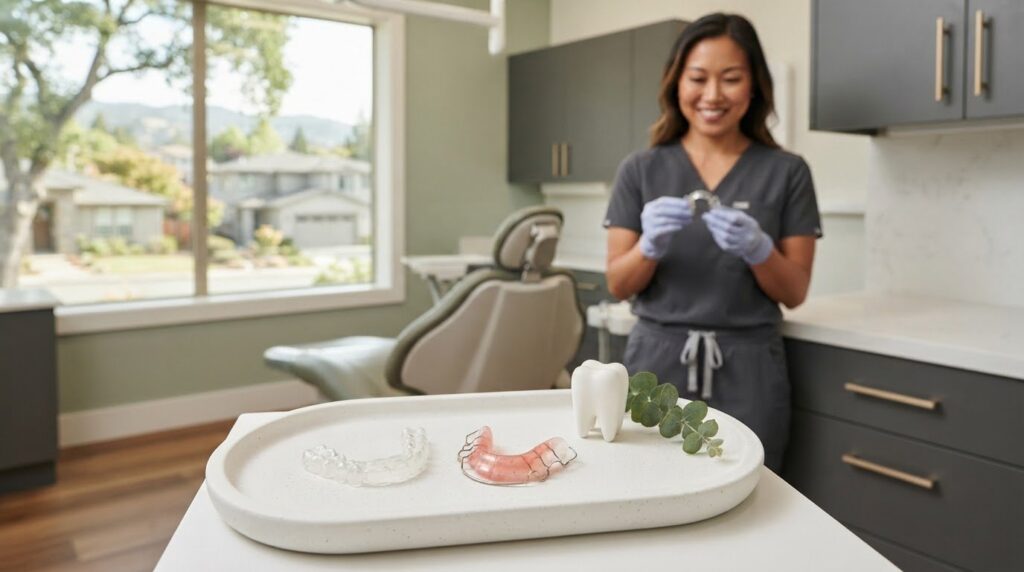
A clear retainer is a nearly invisible plastic appliance shaped to fit over the teeth. A Hawley retainer combines a wire with an acrylic base. The wire sits across the front teeth, while the base rests inside the mouth. Both are removable, so you can take them out for meals and cleaning.
Durability differs, too. Clear plastic retainers typically need replacement every 6-12 months, while Hawley retainers can last 5-10 years with proper care. Those ranges make maintenance and replacement part of long-term retention, not an afterthought. If either appliance becomes damaged or stops fitting correctly, its ability to hold teeth comfortably may change.
Removable Retainer Compliance
Compliance means wearing a removable retainer according to your dental treatment plan. Consistent wear matters because leaving it out for long stretches can leave your teeth without support in their corrected positions.
Choose an appliance you can comfortably wear as directed, whether clear or Hawley. A retainer that feels uncomfortable may be harder to use consistently, so fit matters as much as appearance. Keep it in its case whenever it’s out of your mouth; a napkin or loose pocket makes loss or damage more likely. These small habits support steady retainer wear.
Vivera Retainers
Vivera is a named option among removable clear retainers. Like other clear retainers, it differs from a Hawley appliance, which has a visible wire and acrylic base.
The practical question is whether a clear style fits your daily routine and prescribed schedule. Whichever retainer you wear, rinse it with lukewarm water after removal, then gently clean it with a soft toothbrush and non-abrasive cleaner. Hot water can distort plastic retainers. For weekly deep cleaning, soak a removable retainer for 15-20 minutes in an appropriate cleaning solution.
Protect the appliance between uses. A case helps reduce the risk of damage or loss, while gentle cleaning keeps residue from building up. Custom-made retainers can use digital impressions of your teeth to support fit and comfort. If your retainer feels different or no longer sits correctly, a dental retainer fitting can help address the issue. Dental retainer support may be a useful next step.
Why teeth shift after orthodontic treatment
Orthodontic treatment moves teeth into new positions, but those positions aren’t automatically permanent. After Invisalign or traditional braces, the surrounding gums and bone continue adjusting, while natural tooth movement can continue over time. Retainers help maintain alignment during this adjustment and beyond.
After orthodontic tooth movement, bone and gum tissue can take up to 12 months to stabilize around teeth in their new positions. During that period, teeth may shift as supporting tissues adapt. This is one reason retainer wear matters after Invisalign treatment, even when your smile appears straight and the aligners are finished.
Teeth can also move naturally later in life, so the risk of shifting doesn’t end when tissues settle. Pressure from the tongue, lips, and chewing can influence tooth position over time. For example, a small gap closed during treatment may gradually reopen without retention. That possibility helps explain why long-term retainer use is often recommended.
A fixed retainer offers another way to help limit movement. It’s a thin metal wire bonded to the backs of teeth, often used to help prevent shifting in the lower front jaw. Because it stays attached, it doesn’t depend on remembering to put in a removable appliance each night. It does require regular monitoring and careful cleaning to help prevent plaque buildup.
Fixed retainers need attention because the bonding can loosen or the wire can become damaged. If a section feels detached, sharp, or different against your tongue, avoid pulling at it. A change in the wire can affect how it supports your teeth, so have its condition and fit assessed. Removable retainers also need inspection if they crack, warp, or stop seating properly.
Teeth grinding adds another practical consideration. If you grind while sleeping, mention it during a dental review so your retainer can be assessed for wear or damage. Don’t assume a worn or broken appliance still holds teeth as intended. A good fit matters, whether your plan uses a fixed wire, a removable retainer, or both.
If you’re asking, “Do I need a retainer after Invisalign forever?” the reason for long-term wear is that teeth can shift well beyond the initial adjustment period. A broken retainer, a reopened space, or a newly tight fit can signal movement. Keep the appliance clean, avoid forcing one that no longer fits, and follow your orthodontic retention plan.

Natural tooth movement and relapse
Teeth can shift naturally after Invisalign or braces, even when treatment has corrected their alignment. If you stop wearing your retainer, it may feel tight within a few weeks, and noticeable shifting commonly occurs within 1 to 2 years.
Natural Tooth Movement
Natural tooth movement is the gradual change in tooth position that can happen after orthodontic treatment. It matters because maintaining corrected alignment requires ongoing retention, rather than relying on treatment alone to hold teeth in place.
Relapse describes teeth moving away from their corrected positions and toward their original positions. For example, a previously closed gap may begin to reopen, or crowded teeth may start to overlap again. These changes can happen long after Invisalign or traditional braces, so the end of active treatment doesn’t mean tooth movement has ended.
Time without retention can make movement more noticeable. Significant relapse without retention is common over 5 to 10 years. That doesn’t mean every person’s teeth follow the same pattern; it explains why a long-term retention plan matters even when your smile looks stable.
Preventing Orthodontic Relapse
Preventing orthodontic relapse means using a retainer as prescribed to help keep teeth in their corrected positions. Consistent retention supports your results while natural movement continues.
Follow the wear schedule provided after treatment, including any change from daytime to nighttime use. Don’t reduce wear simply because your teeth look straight or the retainer feels comfortable. A removable retainer should sit correctly and remain in good condition; a fixed retainer should stay bonded and be monitored regularly.
Make the routine easier to maintain by storing a removable retainer in its case whenever it’s out of your mouth. If it feels unusually tight, no longer fits, or appears damaged, don’t force it into place. These changes can signal movement or a fit issue, and addressing them promptly can help prevent the problem from progressing.
Stopping Retainer Wear
Stopping retainer wear removes support that helps preserve alignment after orthodontic treatment. Without that retention, teeth may gradually move toward their original positions.
A retainer can feel tight after only a few weeks without wear, which may indicate that teeth have shifted. After stopping, patients commonly experience noticeable shifting within 1 to 2 years. Longer periods without retention also carry a risk of significant relapse over 5 to 10 years.
If you’ve stopped wearing your retainer and it no longer fits, don’t force it over your teeth. Note when you last wore it and whether a space has reopened or your teeth look different. Those details help explain the change during a dental assessment. Restarting or changing your prescribed routine should follow professional instructions, especially if the appliance feels painful or doesn’t seat fully.
Why retainers are recommended after Invisalign or braces
Invisalign and braces move teeth; retainers help keep them in their corrected positions afterward. This distinction matters: finishing active treatment doesn’t end the need to protect alignment. Retention supports your results as the tissues around moved teeth adjust and natural movement continues.
During orthodontic treatment, aligners or braces apply planned forces to guide teeth. Once those appliances are removed, the retainer serves a different purpose: it holds, rather than actively moves, teeth. For example, a retainer helps maintain a space that Invisalign closed. Without retention, teeth can drift toward their previous positions, even if treatment initially produced a straight smile.
The supporting bone and gum tissue also need time to stabilize around teeth in their new positions. That adjustment can take up to 12 months after orthodontic tooth movement. Wearing your retainer during this period supports the corrected alignment while those tissues adapt. The appliance is not a sign that treatment failed; retention is a planned part of preserving the result.
Retainers matter beyond the initial adjustment period because natural tooth movement can continue over time. You may notice a retainer feeling tight after a break or see a small space begin to reopen. These changes show why a stable result isn’t automatically permanent. For many people, the practical plan includes long-term nighttime wear, following their dentist’s instructions.
There’s a difference between looking aligned and maintaining alignment. A mirror shows the current position, but it can’t tell you whether teeth will stay there without support. A correctly fitting retainer provides ongoing retention; a damaged or poorly fitting one may not hold teeth as intended. Keeping it clean, storing it safely, and monitoring its fit are useful parts of the routine.
Whether your treatment used Invisalign or braces, retention helps reduce the chance of teeth shifting back toward their original positions. Removable retainers need consistent use, while fixed retainers need regular monitoring and careful cleaning. In either case, wearing your retainer as prescribed supports the results of orthodontic treatment.
So, do I need a retainer after Invisalign forever? Long-term retention is generally recommended because teeth can move naturally long after active treatment ends. “Forever” often means maintaining a routine over the long term, commonly wearing a retainer at night, rather than wearing it all day indefinitely. The schedule may change, but stopping entirely can leave teeth without support.
Think of braces or Invisalign as the movement phase, and retention as the maintenance phase. For example, after treatment closes a gap, continued retainer use helps keep it closed. Follow your prescribed schedule, and have the retainer’s fit and condition assessed if it feels different or no longer seats comfortably. Ongoing care helps protect the alignment you worked to achieve.
Butterfly Dental Care: Routine Dental Cleanings
Butterfly Dental Care offers dental retainers and routine dental cleanings to support oral care after Invisalign. If your retainer feels different, no longer fits comfortably, or needs replacing, a dental visit can help address the concern. Routine cleanings also support general dental health while you maintain your retainer-wear routine.
Whether you’ve completed Invisalign or are planning treatment, Butterfly Dental Care provides Invisalign orthodontic treatment and dental retainers. A dental visit can help you discuss your retention needs alongside your broader oral health goals.
For a comfortable next step, contact Butterfly Dental Care to discuss dental retainers or routine cleanings.
Make Your Next Step a Comfortable One
Long-term retention works best when it fits your real life, not just your dental plan. If you’re still asking, “Do I need a retainer after Invisalign forever?” use that question to start a conversation about your current retainer, its fit, and a routine you can maintain. A retainer that feels uncomfortable or has changed can make consistent wear harder, so raising the concern is a practical next step.
Butterfly Dental Care can support your broader oral health with routine dental cleanings, dental implants, and laser dental treatments. Whether you’re looking for ongoing preventive care or have another dental goal, a visit can help you discuss what matters to your smile.
Contact Butterfly Dental Care to talk about your dental care. A thoughtful next step can help you feel more confident about caring for your smile.
Frequently Asked Questions
Can I Take Breaks from My Retainer?
Brief breaks for eating and cleaning are part of wearing a removable retainer if your instructions allow them. Avoid taking extra days off because the appliance feels comfortable; comfort doesn’t show whether teeth will stay in position without support. If you miss a night, return to your prescribed routine rather than doubling wear time. If the retainer feels unusually tight or won’t seat fully, don’t force it.
Do you have to wear retainers forever after braces?
Long-term retainer wear is commonly recommended after braces because teeth can shift naturally after treatment. “Forever” usually means maintaining a lasting routine, often nighttime wear, rather than wearing a retainer all day indefinitely. Some long-term schedules use a retainer a few nights per week. If you’re considering stopping, follow your orthodontic instructions instead of relying only on how straight your teeth look.
How to Care for Your Retainers?
Handle your retainer gently and clean it routinely to help protect its fit. For daily care, rinse it after removal and use a soft toothbrush with a non-abrasive cleaner. Avoid hot water, which can distort plastic retainers. For a deeper weekly clean, soak it for 15-20 minutes in retainer cleaning solution. Store it in its case whenever it’s out of your mouth, rather than wrapping it in a napkin.
My retainer doesn’t fit anymore, what should I do?
Don’t force a retainer that won’t fit or seat comfortably. A changed fit can mean the appliance has warped or your teeth have shifted. Keep wearing it only as directed, and arrange a dental assessment of its condition and fit. Note whether it feels tight across several teeth or catches in one spot. That detail can help explain what changed and whether the retainer needs attention.
Types of Retainers: What Are Your Options?
The main options include clear removable retainers, Hawley removable retainers, and fixed retainers. Clear retainers are nearly invisible; Hawley styles use a wire and acrylic base. A fixed retainer is a thin wire bonded behind the teeth, so it doesn’t need to be put in each night. The right option depends on your prescribed plan, comfort, and ability to maintain consistent wear and cleaning.
What If I Lost or Broke My Retainer?
Contact Butterfly Dental Care promptly to discuss replacement if your retainer is lost or broken. Don’t wear a cracked or distorted appliance, since it may not fit or hold teeth correctly. Your final Invisalign tray can serve as a temporary retainer, but a purpose-made retainer is recommended for ongoing use. If you still have the damaged appliance, bring it along so its condition can be assessed.
How long should you wear Invisalign retainers each day after treatment?
Some patients wear removable retainers for 20-22 hours per day during the first 3-6 months after Invisalign treatment. The schedule may then transition to nighttime wear. Follow the wear plan you received, including when to remove the appliance for meals and oral hygiene. Don’t assume the retainer schedule matches your former aligner routine, since retention follows a different phase of care.
What is the recommended retainer wear schedule after Invisalign?
A common schedule begins with full-time wear, then moves to nighttime use after the initial retention phase. Nightly wear may continue long term, sometimes changing to a few nights per week as maintenance. Follow your dentist’s instructions for each transition rather than reducing wear on your own. If a space reopens or the retainer becomes tight after a break, those changes can indicate tooth movement.
 English
 Chinese (Simplified)
 Spanish
 Vietnamese