
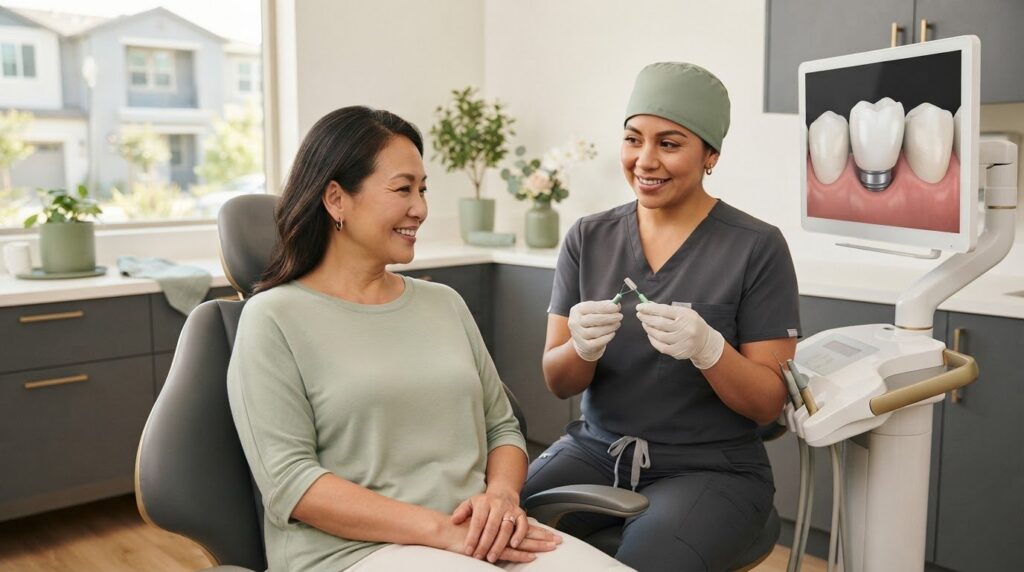
Did you know that nearly 74% of dental implant recipients are unaware of the warning signs for late-stage complications? Reaching the five-year milestone with your restoration is a wonderful achievement, but it’s also a period where the risk of biological complications can quietly escalate. You’ve likely spent years enjoying the confidence of a restored smile; yet, it’s completely natural to feel a lingering anxiety about whether your routine for caring for dental implants after 5 years is still enough. Whether you’re confused about how your care should differ from natural teeth or you’re worried about subtle gum recession, your concerns are valid and deserve a gentle, expert response.
We’re here to provide the clarity you need to protect your health. This guide covers the essential steps for long-term maintenance, helping you transition from the initial healing phase to a strategy of biological preservation. You’ll discover a professional maintenance checklist, learn how to spot early signs of trouble like peri-implantitis, and see how modern, gentle technologies like laser cleaning can keep your smile secure for decades to come. Our goal is to replace uncertainty with the peace of mind that comes from knowing exactly how to safeguard your smile’s future.
Key Takeaways
- Understand why the five-year mark represents a shift toward biological preservation and why consistent monitoring is vital for your long-term health.
- Learn the specific daily habits and specialized tools required for caring for dental implants after 5 years to prevent the onset of irreversible bone loss.
- Discover which common household dental products can unintentionally scratch titanium components and how to choose safer, non-abrasive alternatives.
- Explore how advanced laser dental treatments provide a gentler, more effective method for decontaminating implant surfaces compared to traditional metal instruments.
- Identify the subtle signs of peri-implantitis that require a professional evaluation to ensure your restorative investment remains secure and functional.
Why the 5-Year Milestone is Critical for Dental Implants
Reaching the five-year mark is a significant victory for your oral health. By this stage, your restoration has typically reached what clinicians call a “biological steady state,” where the bone has fully matured and stabilized around the titanium post. While the first few years of ownership often focus on the healing process and monitoring for mechanical issues like loose screws or crown chips, caring for dental implants after 5 years requires a shift in perspective. Your focus now moves toward biological preservation, specifically protecting the perimucosal seal. This seal is the delicate collar of gum tissue that acts as a protective O-ring, preventing bacteria from reaching the underlying bone. Peri-implant health is the stability of bone levels and gum attachment over time.
Even though the hardware is firmly integrated, the biological environment surrounding it remains dynamic and vulnerable. Bacteria don’t distinguish between a natural tooth root and a medical-grade titanium surface. Without the natural defenses provided by a tooth’s anatomy, understanding peri-implantitis becomes your most important tool for long-term success. This condition involves progressive bone loss and inflammation that can threaten the entire restoration if the soft tissue barrier is compromised. By focusing on maintenance now, you’re protecting the foundation of your investment.
The Difference Between Natural Teeth and Implants at 5 Years
Natural teeth are connected to your jaw by the periodontal ligament, a complex network of fibers that act as shock absorbers and sensory messengers. Implants lack this ligament; they’re fused directly to the bone. This means you won’t feel the same “warning” sensations if you’re biting too hard or if a subtle infection is beginning to develop. Because implants can’t get cavities, it’s easy to fall into the trap of thinking they’re maintenance-free. However, the bone supporting an implant is just as susceptible to plaque-driven damage as the bone around a natural tooth, often reacting more quickly to neglect because of the lack of ligament-based blood supply.
Signs of a Successful 5-Year Integration
After half a decade, a healthy implant should feel completely natural and secure. During your professional checkups, we look for stable bone levels on your radiographic imaging, ensuring no saucer-shaped shadows are forming around the implant threads. Your gingival tissue should be firm, pink, and resilient, fitting snugly around the abutment. Crucially, there should be an absence of bleeding on probing during your cleanings. If your gums bleed when we gently measure the pocket depth, it’s often the first sign that your home care routine needs a gentle, personalized adjustment to keep the area pristine.
The Primary Threat to Longevity: Understanding Peri-Implantitis
Once you’ve enjoyed your restoration for half a decade, your focus naturally shifts toward long-term biological stability. While the titanium post itself is incredibly durable, the environment surrounding it remains susceptible to a condition called peri-implantitis. Peri-implantitis is the leading cause of implant failure after the 5-year mark. Global studies indicate that this condition affects approximately 19.5% to 23.3% of patients, making it a common but preventable hurdle in long-term care. It’s important to distinguish between peri-implant mucositis, which is a reversible inflammation of the gums, and peri-implantitis, which involves irreversible bone loss around the implant threads.
Biofilm behaves differently on titanium than it does on natural tooth enamel. Titanium surfaces, while biocompatible, can harbor complex bacterial colonies that are often more difficult to disrupt than those on a natural tooth. This is why caring for dental implants after 5 years requires such a dedicated, precise approach. According to FDA dental implant safety guidance, understanding these long-term biological risks is essential for every patient. Unlike a cavity in a natural tooth that might cause sensitivity to cold or sweets, bone loss around an implant is often completely silent. You likely won’t feel any pain until the condition has reached an advanced stage, which makes professional monitoring and proactive care vital for your peace of mind.
Red Flags You Should Never Ignore
Because pain is a late-stage symptom, you must become an advocate for your own oral health by watching for subtle shifts. Healthy gums should be pale pink and firm. If you notice a deep red or purple hue around the implant site, or if the tissue appears puffy and swollen, it’s time for a professional evaluation. Other warning signs include a persistent bad taste or odor that doesn’t go away after brushing, or any sensation that the crown feels slightly loose. If you notice these changes, exploring laser dentistry in San Jose can provide a gentle way to decontaminate the area and restore health before the bone is compromised.
Risk Factors for Late-Stage Failure
Your systemic health plays a massive role in how your body maintains the bone-implant interface. Conditions like diabetes can affect your body’s ability to heal and fight off the bacteria that cause peri-implantitis. Similarly, smoking significantly reduces the blood supply to the gums and bone, making it harder for the perimucosal seal to remain intact. Beyond biological factors, mechanical stress from bruxism, or teeth grinding, can lead to micro-fractures in the bone or fatigue in the implant screw. Protecting your investment means looking at your health holistically to ensure your body continues to support the restoration for a lifetime.
Daily Maintenance Checklist for Dental Implants at Home
Maintaining the longevity of your smile starts with a refined home routine that respects the unique anatomy of your restoration. While your implants likely feel like a natural part of your life now, they require a specific type of attention to detail that differs from caring for natural teeth. Caring for dental implants after 5 years means being mindful of the materials you use to prevent microscopic damage. We recommend using a soft-bristled electric toothbrush equipped with a pressure sensor. Since implants lack the sensory nerves of a natural tooth, you won’t always feel if you’re brushing too hard, which can lead to gum recession over time.
The choice of toothpaste is equally vital for long-term success. You should avoid abrasive formulas, such as those designed for heavy whitening or those containing baking soda. These can create tiny scratches on the titanium components or the porcelain crown, providing a perfect hiding spot for biofilm to colonize. To keep the deep sub-gingival spaces clean, a low-power water flosser is often more effective and gentler than traditional string floss. The Cleveland Clinic provides excellent foundational advice on caring for dental implants, emphasizing that consistent hygiene remains the cornerstone of a healthy restoration regardless of how long you’ve had it.
The Nighttime Routine for Implant Protection
Your nighttime routine should focus on both cleanliness and mechanical protection. For many patients, a custom-fitted nightguard is an essential tool to prevent the stresses of teeth grinding from fatiguing the implant hardware. If you have a complex restoration like an All-on-4 dental implant bridge, you’ll need to use specialized tools like interproximal brushes to clean the delicate space between the bridge and the gum line. Finish your evening by using an alcohol-free antimicrobial mouthwash. Avoiding alcohol is important because it prevents dry mouth, ensuring your natural saliva can continue to protect your oral microbiome while you sleep.
Dietary Habits for Long-Term Success
Protecting your investment also involves making thoughtful dietary choices. While your implants are strong, they aren’t indestructible. Avoid biting directly into ice, hard candies, or unpopped popcorn kernels, as these are the leading causes of porcelain chipping. From a biological standpoint, your jawbone needs ongoing support from Vitamin D and Calcium to stay dense and healthy. Staying well-hydrated throughout the day is another simple yet powerful habit. Proper hydration supports a healthy salivary flow, which serves as your mouth’s first line of defense against the bacteria that cause inflammation around your implant site.

Professional Maintenance: The Role of Laser Dentistry
Professional checkups are the essential partner to your home hygiene routine. When caring for dental implants after 5 years, the tools your clinician uses become just as important as their technique. Traditional metal scalers, which are standard for natural teeth, can inadvertently scratch the polished surface of a titanium implant. These microscopic grooves act as magnets for bacteria, making future cleanings more difficult and increasing the risk of biofilm accumulation. At Butterfly Dental Care, we prioritize a “gentle checkup” philosophy that protects your hardware while ensuring the surrounding tissue remains healthy and resilient.
By utilizing laser dentistry San Jose, we can decontaminate the implant surface with incredible precision. Laser energy targets and kills harmful bacteria hidden deep within the gum pockets without the need for invasive scraping against the titanium fixture. This modern approach is particularly effective because the light energy can reach narrow areas that traditional tools might miss; it provides a comprehensive cleaning that supports the biological longevity of your restoration without causing discomfort or mechanical wear.
Radiographic Monitoring: What Doctors Look For
Visual inspections only tell part of the story, which is why annual X-rays are a non-negotiable part of long-term maintenance. We use these high-resolution images to track your bone levels to the millimeter, comparing them against the baseline images taken during your first year of integration. This allows us to detect early signs of “crestal bone loss” long before they are visible to the naked eye. Catching these subtle shifts early is the key to preventing the silent progression of peri-implantitis and ensuring your restorative investment stays secure for the decades ahead.
Deep Cleaning Protocols for Implants
When a deeper cleaning is necessary, we swap out traditional metal for specialized carbon-fiber or plastic instruments designed specifically for implant surfaces. These materials are soft enough to prevent scratching but firm enough to remove stubborn deposits. If we detect early signs of inflammation or infection, we may recommend advanced laser gum treatment to resolve the issue non-surgically. We finish the process by gently polishing the abutment, creating a smooth, glass-like surface that discourages future plaque adhesion and keeps your smile feeling clean and fresh.
If it’s been more than six months since your last professional evaluation, schedule your personalized implant maintenance visit with our San Jose team to protect your smile’s future.
Securing Your Investment in San Jose: Next Steps
Reaching the five-year mark with your dental implants is a testament to both the quality of your restoration and your commitment to your oral health. In a fast-paced environment like Silicon Valley, it’s easy to let routine maintenance slide once the initial healing phase feels like a distant memory. However, choosing a local restorative expert for your long-term follow-up is one of the most effective ways to ensure your smile remains functional and beautiful. Dr. Jianye Chen and the team at Butterfly Dental Care specialize in this specific phase of preservation, offering a bespoke approach to caring for dental implants after 5 years that prioritizes your comfort and peace of mind.
Staying consistent with these specialized checkups is the best way to avoid the stress and disruption of needing urgent dental care San Jose. While our team is always ready to provide compassionate relief in a crisis, our primary goal is to prevent complications before they start. By scheduling a dedicated “5-year audit,” you’re not just checking a box; you’re securing a significant financial and health investment with a modern guide who understands the nuances of restorative dentistry. This proactive strategy ensures that small shifts in bone or tissue health are addressed with gentle, high-tech solutions rather than invasive revisions.
What to Expect During a Maintenance Visit
Your maintenance visit is designed to be a thorough yet intentionally calming experience. We begin with a comprehensive review of your medical history and lifestyle factors, as changes in your systemic health can directly influence the long-term stability of your implants. Dr. Chen performs a gentle examination of each implant site, checking for tissue resilience and the integrity of the perimucosal seal. Whether you have a single crown or a complex bridge, we develop a customized hygiene plan tailored to your specific restorative work, ensuring you have the right tools and techniques for your unique situation.
Booking Your Consultation in 95129
Our office is conveniently located to serve the San Jose community, providing a high-tech yet deeply human environment for your restorative care. Proactive maintenance is significantly more comfortable and predictable than reactive surgery, making these regular touchpoints essential for your long-term wellness. If you’re approaching or have passed the five-year milestone, we invite you to reach out and experience a superior level of attentive, patient-centric care. Schedule your implant wellness check at Butterfly Dental Care today.
Preserving Your Restored Smile for a Lifetime
Reaching the five-year mark is a significant achievement that shifts your focus from initial healing to long-term biological preservation. You’ve learned that caring for dental implants after 5 years requires a unique approach, whether that’s choosing non-abrasive tools at home or utilizing advanced professional care to protect the perimucosal seal. By understanding the silent nature of peri-implantitis and the importance of annual radiographic audits, you’re taking the most critical steps to safeguard your health and your financial investment.
At Butterfly Dental Care, we believe that high-tech solutions should always be paired with a gentle, patient-centric touch. Dr. Jianye Chen combines his restorative expertise with advanced laser technology to provide painless cleanings that traditional metal tools simply can’t match. Our local San Jose 95129 practice is dedicated to being your modern guide through every stage of your dental journey, ensuring you feel respected and supported at every visit. We’re here to provide the reliable support you need to keep your smile secure and beautiful for the decades ahead.
Protect your smile—Book your long-term implant maintenance visit with Dr. Chen today.
Frequently Asked Questions
Is it normal for a dental implant to feel slightly loose after 5 years?
It is never normal for an implant to feel loose. Whether the sensation comes from a loose prosthetic crown or the titanium post itself, you should seek a professional evaluation immediately. A loose implant often indicates that the bone-to-metal bond has been compromised, while a loose crown might just need a simple screw tightening. Proactive assessment at our San Jose office helps prevent minor mechanical issues from turning into permanent failures.
Can I still get gum disease if I have dental implants?
Yes, implants are still vulnerable to a form of gum disease known as peri-implantitis. While the titanium post cannot decay like a natural tooth root, the surrounding soft tissue and bone can still become inflamed by bacterial biofilm. Caring for dental implants after 5 years involves vigilant hygiene to prevent these infections, which can travel faster toward the bone than they do around natural teeth due to a lack of protective ligaments.
How often should I have my dental implants professionally cleaned?
Most patients benefit from professional cleanings every three to six months. Structured maintenance recalls are vital because they can reduce the five-year incidence of peri-implantitis from 43.9% down to 18% in high-risk individuals. During these visits in 95129, Dr. Chen uses specialized tools to decontaminate the area, ensuring that plaque doesn’t have the opportunity to compromise the delicate seal between your gums and the restoration.
Do I need a special type of toothbrush for my 5-year-old implants?
You don’t necessarily need a “special” brush, but a soft-bristled electric toothbrush with a pressure sensor is highly recommended. It’s important to avoid stiff bristles that can scratch the restorative materials. Additionally, you should pair your brush with a non-abrasive, low-RDA toothpaste. Avoiding harsh whitening formulas helps maintain the smooth surface of the titanium and porcelain, which prevents bacteria from finding microscopic grooves to inhabit over the long term.
What happens if the bone around my implant starts to recede?
Bone recession, or crestal bone loss, is a serious sign of peri-implantitis that requires clinical intervention. If left untreated, this recession can lead to the loss of the entire implant. We use radiographic monitoring to detect these changes at the sub-millimeter level. Once identified, we can often utilize advanced laser dental treatments to decontaminate the site and stimulate the body’s natural healing processes to stabilize the supporting jawbone.
Can a dental implant be “saved” if it starts to fail after many years?
Many failing implants can be successfully rescued if the issue is caught before total bone loss occurs. Modern laser protocols, like those we offer in San Jose, have shown stabilization rates as high as 95% for compromised implants. These treatments vaporize bacteria and promote re-integration without the need for traditional, invasive surgery. Early detection during your routine restorative checks is the single most important factor in saving a long-term investment.
Are there specific foods I should avoid to protect my dental implants long-term?
You should generally avoid biting directly into extremely hard substances like ice cubes, unpopped popcorn kernels, or hard candies. While the implant post is incredibly strong, the porcelain crown can chip under excessive force. It’s also wise to be cautious with very sticky foods that could potentially loosen a crown over time. Maintaining a balanced diet rich in Calcium and Vitamin D further supports the health of the bone holding your implant in place.
Does Dr. Jianye Chen offer specialized maintenance for implants placed by other dentists?
Dr. Chen frequently welcomes patients who received their initial implants elsewhere but are now seeking expert maintenance in the 95129 area. Caring for dental implants after 5 years requires specialized restorative knowledge, regardless of who performed the original surgery. Our team provides a welcoming, patient-centric environment where we can audit your existing restorations and create a personalized hygiene plan that ensures your smile remains healthy and stable for a lifetime.
 English
 Chinese (Simplified)
 Spanish
 Vietnamese